The head of the European Commission, Ursula von der Leyen, stated that active cooperation with the U.S. continues at all levels. Von der Leyen reported that the European Union is prepared to respond decisively and firmly if necessary, but at the same time, Brussels does not want to be the cause of an escalation of the conflict. In other words, Europe is ready to continue yielding to Trump, as it fears America's exit from NATO. For any ultimatums or demands from Trump, Brussels is prepared to respond with angry rhetoric and condemnation, but no more. Any retaliatory package looks daunting only on paper or in the mouths of European politicians.
It is worth recalling that last year, Europe and the U.S. entered into a trade agreement that many economists believe is "one-sided" in Brussels' favor. The European Union committed to purchasing hundreds of billions of dollars worth of energy resources from the U.S., investing hundreds of billions of dollars in the American economy, and waiving its tariffs on American goods. All Europe received in return was a reduction in tariffs to 15%. Trump got everything; Europe got practically nothing.
This deal is highly indicative, as it frees up the American leader's hands, showing that an adversary can be manipulated and that one's own trump cards can be played confidently. Now the White House can demand the transfer of control of an entire island to the U.S. and, in the event of refusal, threaten new tariffs, despite the trade agreement. Accordingly, more threats and demands will follow in the future. And each time, the European Union will pull its "trade bazooka" from the dusty shelf only to put it back again. I remind you that Europe is not ruled by a single person, unlike the U.S. To implement a counter-coercion mechanism, the approval of the majority of member states in the alliance is required. France was ready to support the use of the ACI, while Germany was hesitant. Opinions among other EU members were also divided. Belgium supported retaliatory measures, while many countries with smaller economies were afraid to confront the U.S.
As for Greenland, there are still no details. It is assumed that the deal between Trump and Rutte involves revising another agreement between the U.S. and Denmark from 1951. If control of the island remains with Copenhagen, the new version of the agreement may include provisions for the faster deployment of American troops to Greenland. However, as many experts note, the 1951 agreement is comprehensive. It contains all necessary permissions for the U.S. to use the island. Therefore, it is likely that the old, good rule "Trump always chickens out" has taken effect.
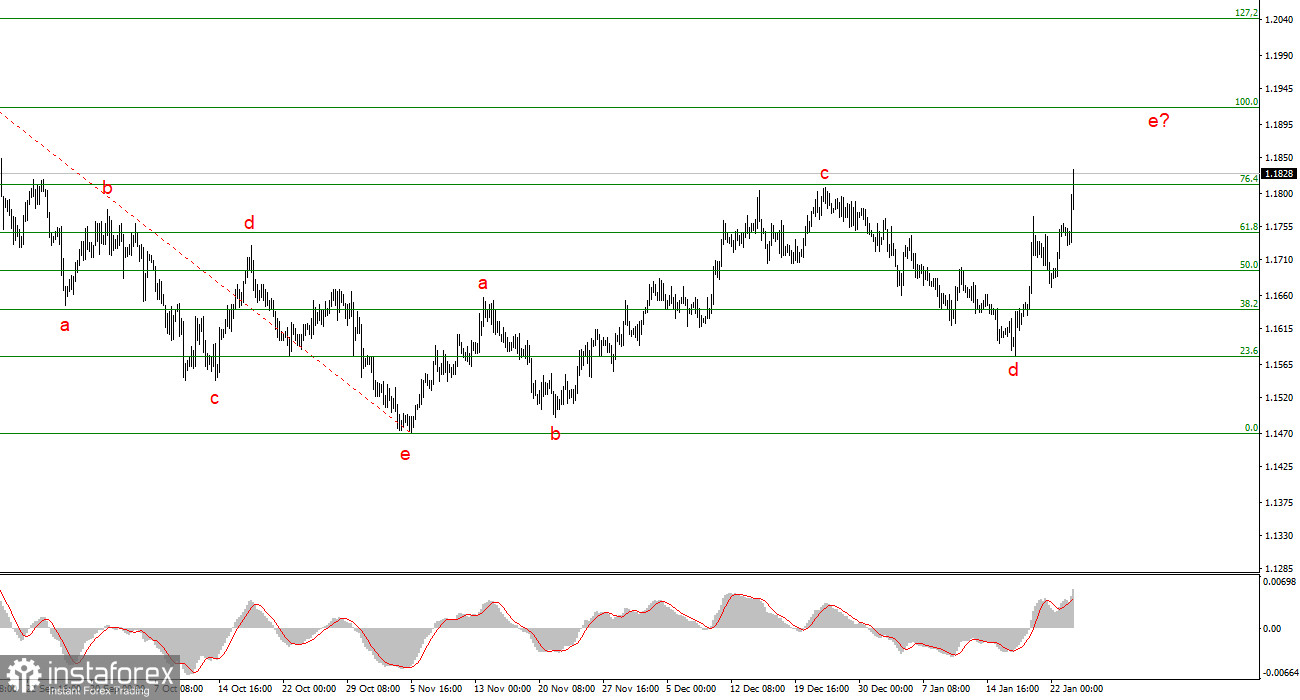
Wave Picture for EUR/USD:
Based on the analysis of EUR/USD, I conclude that the instrument continues to build an upward trend segment. Donald Trump's policy and the Federal Reserve's monetary policy remain significant factors in the long-term decline of the American currency. The targets of the current trend segment may reach the 25-figure mark. At this moment, I believe corrective wave 4 has completed its formation, and I expect further price increases, with the first target around 1.1918.
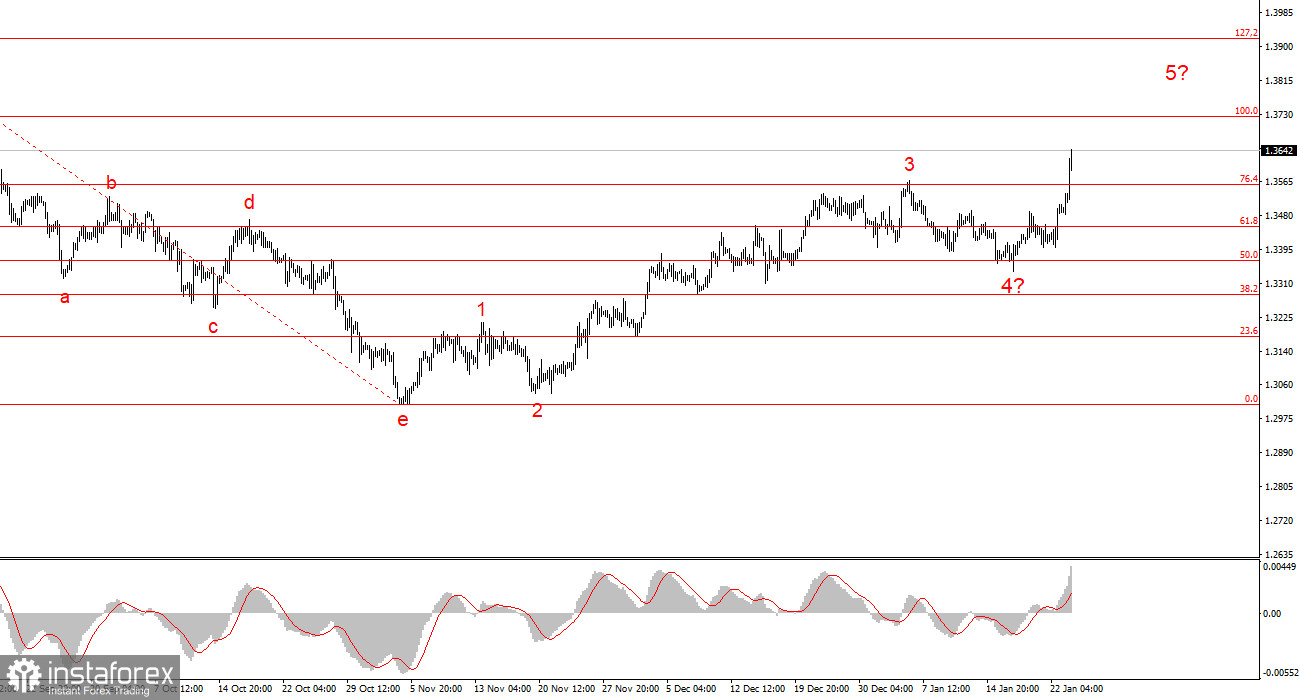
Wave Picture for GBP/USD:
The wave picture for the GBP/USD instrument has become clearer. The presumed wave 5 in 5 is currently forming, but the internal wave structure of the global wave 5 may take on a much more extended form. I believe that price increases will continue soon, with targets around the 1.3721 and 1.3913 levels, corresponding to the 100.0% and 127.2% Fibonacci levels. After completing the current five-wave pattern, the instrument may form three corrective waves. But for now, the upward segment is not yet complete, and after the correction, I expect a new impulsive wave segment in the direction of the 42 figure.
Key Principles of My Analysis:
- Wave structures should be simple and clear. Complex structures are difficult to trade, and they often lead to changes.
- If there is no confidence in what is happening in the market, it is better not to enter it.
- There is never 100% confidence in the direction of movement, and there never can be. Do not forget about protective Stop Loss orders.
- Wave analysis can be combined with other types of analysis and trading strategies.